


Georgetown program ties US students to Beijing-linked groups
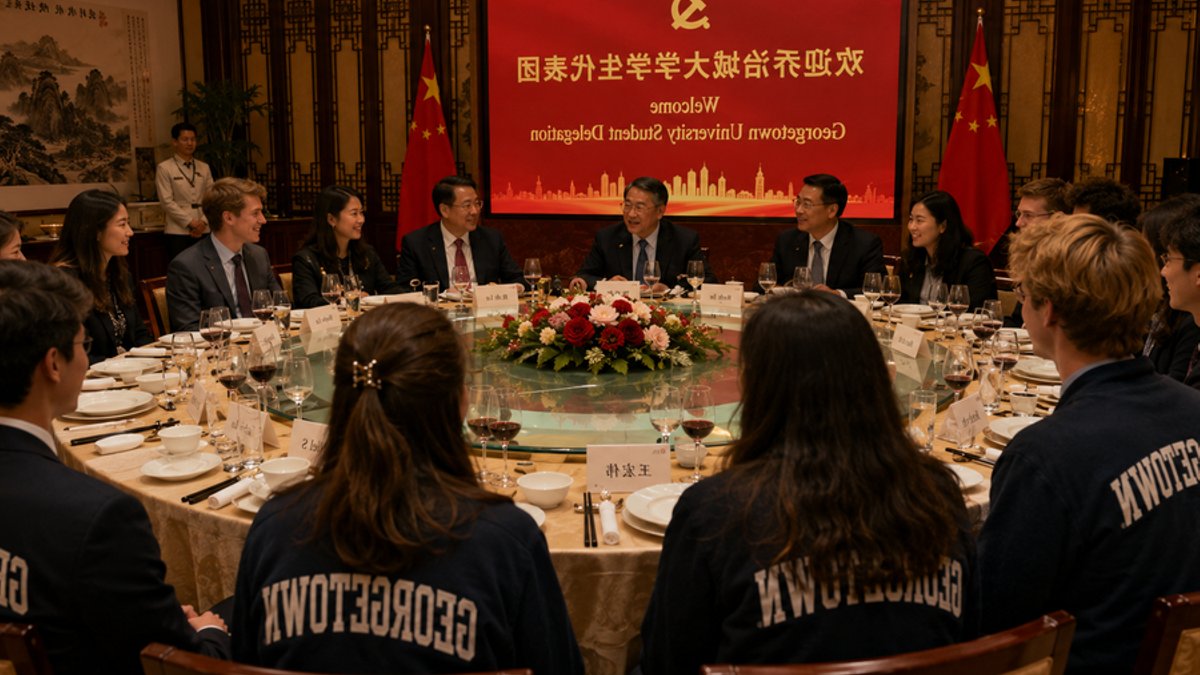
Georgetown University has spent the last decade developing one of the nation’s leading academic programs centered on China. Funding for the effort has come partly from tens of millions of dollars donated by groups connected to the Chinese Communist Party. Since 1992, the university has accepted nearly $1.5 billion in foreign gifts and contracts. Over the same period, tuition for American students rose to $74,520 this fall, more than twice the cost in 2006.
Millions from CCP-linked donors
The university’s Initiative for U.S.-China Dialogue on Global Issues began in 2016 after a $10 million contribution from the Hong Kong-based Spring Breeze Foundation. A 2020 Department of Education report connected Spring Breeze to CP Group, a conglomerate with deep commercial ties to the CCP. The company has called itself the first foreign investor approved by the party to enter mainland China.
Georgetown has not disclosed details about these foreign relationships. The initiative expanded into a large program that funds student travel, policy discussions, research groups, and workshops with institutions linked to the Chinese government. By 2019, it had supported 43 student fellows, held 16 U.S.-China workshops, and organized 35 public events. None of these activities provided reciprocal access for American interests inside China.
Related: Engagement Rings Fit for an Empress: The Romanov Collection
The lack of balance reflects the structure of the exchanges. Chinese students participate within a state-directed system that aligns with CCP goals. American students join as private citizens. A truly reciprocal model would require American government-backed programs operating inside Chinese universities with equal access to students and officials, which does not exist.
Access to future policymakers
Georgetown’s collaborations go beyond academic exchanges. The university has worked with Chinese government-linked institutions to create opportunities for students who may enter government, diplomacy, and national security roles.
Andy Yang, a Master of Science in Foreign Service student, wrote that meetings with Chinese officials gave him insight into “the rationality behind Chinese policy positions.” He said the experience would help him in his career. His statement did not address whether those policies included the Uyghur genocide in Xinjiang. If a Chinese student had praised U.S. policies after a similar program, their career in Chinese government would likely end.
Elite U.S. institutions have faced similar scrutiny before. In the 1980s, universities debated whether to accept research grants from the Soviet Union. They weighed academic freedom against national security concerns. The current situation differs in scale—billions in foreign gifts—and in the direct access provided to future policymakers who will shape U.S. strategy toward China.
Related: The 7 Top Security Risks Colleges Face and How to Fix Them
Limited transparency, unanswered questions
The university did not explain how funds from China were used. It is unclear how much went to faculty salaries, student travel, or specific program activities.
Thomas Banchoff, the university’s vice president of global engagement, did not answer when asked what benefits the program provides to U.S. diplomatic, security, or academic interests.
The university charges American families high tuition for access to elite policy leadership opportunities. At the same time, it creates pathways for CCP-linked institutions to reach students who may enter government, diplomacy, and national security roles. Families pay record tuition for an institution that exposes future U.S. policymakers to foreign influence without offering comparable advantages for American interests.


